Wind Turbine 3D Scanning​

Inspect your wind turbine towers for deformities using 3D Scanning

It is estimated that there are over 53,000 wind turbines in the US. With that many in operation, it is inevitable that some will fail, sometimes catastrophically. When that happens, it is necessary to carefully examine the tower to make sure it is structurally sound. 3D scanning is by far the best and most effective tool for wind turbine inspections. With our technology and experience, inspecting wind turbines has never been easier, safer, or cost effective.

Let us scan your project

Examine whether a tower is bent

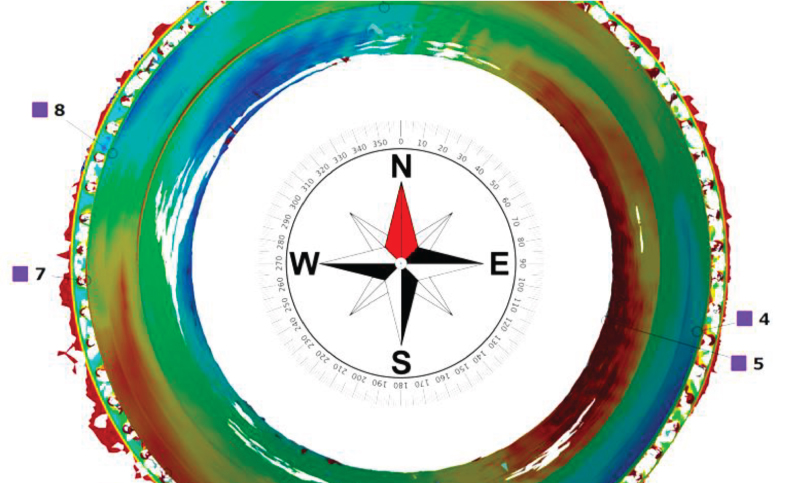
To determine if a tower is bent, an as-designed reference model of the tower is created. This can be reverse-engineered from the 3D scan or created using exact specifications from the manufacturer. The wind turbine 3D scan is then compared to the reference model. The difference between the two is depicted in a deviation image showing the location of any bends and the degree of deflection.
wind turbine tower model
Reference Model
wind turbine 3D scanning
Deviation Analysis
3D scanning wind turbine
Deviation Analysis

Examine locations and depths of dents

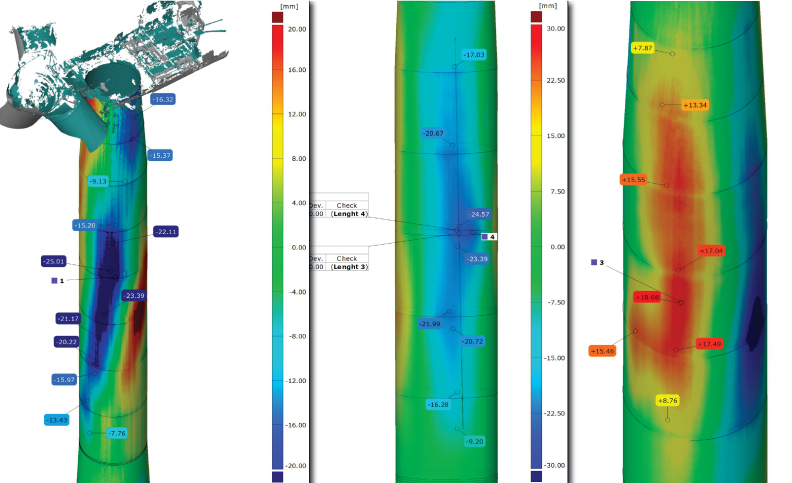
If the turbine has a catastrophic failure, it is likely that the tower was impacted by blades at one or more locations. In order for engineers to evaluate the impact of the dents on the structural soundness of the tower, they need to know the precise shape and depth of the dents. Wind turbine 3D scanning can capture this information safely from ground level.

Obtain section drawings of blades for detailed analysis

We can scan sections of turbine blades. These can be provided as 2D DXF/DWG line drawings, 3D IGS curves, 3D solid NURBS models, or 3D parametric models.
airfoil 3D scan
Blade Section

Long Range 3D Scan of a Wind Turbine blade

We can scan sections of turbine blades and create best fit CAD models. The CAD models can be compared to the scan to reveal small dents and dings. The model can be used to reverse engineer blades, or to design attaching parts such as blade holders, vortex generators, etc. 

3D laser scan wind turbine blade

Raw 3D Scan Data

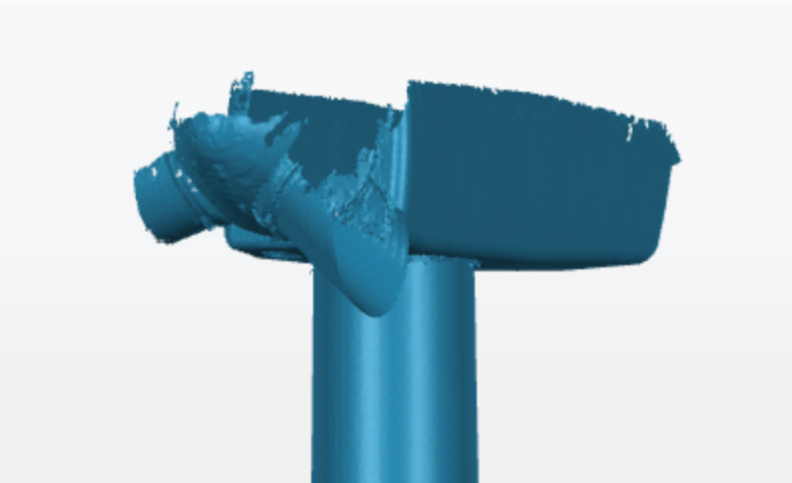
Once we have the raw scan data, we have a “3D digital twin” that can be used to inspect the tower for dents and overall straightness.

Deviation Image Color Maps

Color maps identify the presence of dents and show their depth, shape, size and precise location.  Areas in blue indicate that the scanned tower is below the reference model in that spot, and the areas in red mean that the scanned tower is above the reference model. The reference model can be created from customer-provided drawings, or we can assume ifs shape from the scan. 

Final Product: Deviation Inspection Reports

You receive a comprehensive inspection report that maps out all dents and deformations as well as tower straightness.