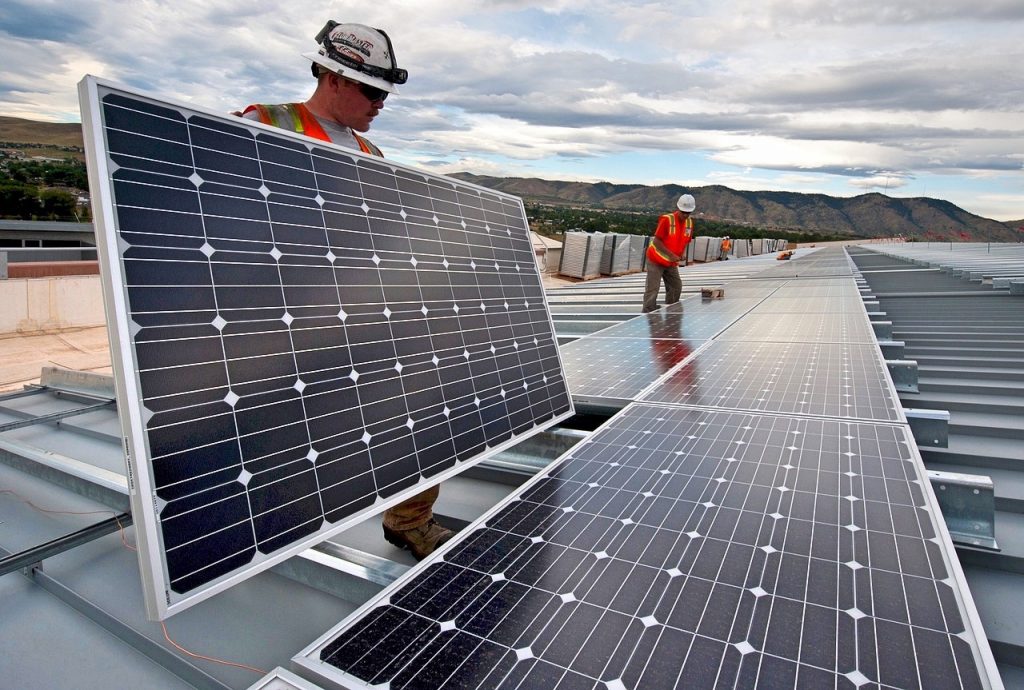
Large energy companies no longer dominate the renewable energy sector. In the era of advanced technologies, tools like 3D laser scanners are widely used in solar energy projects to make them faster and more efficient. 3D laser scanning captures terrain data through laser emissions, which eliminates rework, resulting in a lower cost design and reducing the design time of the project.
Technological development leads to new methods for handling intricate processes that occur during renewable energy project implementation. The 3D scanning technology provides businesses with an efficient and affordable method to collect precise data, which creates a significant advantage. Let’s break down how this technology is benefiting the solar energy industry.
Benefit 1: Faster and Efficient surveying of large areas
Benefit explained: 3D laser scanning needs less time and labour to complete surveys of large solar project sites.
Land surveying of Solar farms is a difficult and time-consuming project because they cover hundreds of hectares. The cost of larger projects decreases because of economies of scale. However, the projects need complete assessments of all site areas.
Use of high-speed 3D laser scanning allows businesses to measure extensive land areas with complete accuracy within brief time periods. The system reduces manual survey requirements while it accelerates project development. The accelerated survey process allows companies to move their projects forward with more trust and faster progress.
Benefit 2: Accurate Identification of optimal panel placement
Benefit explained: 3D laser scanning technology helps determine the best locations for solar installations to maximize energy output.
The site selection process holds critical importance because it determines which locations will provide maximum economic benefits from solar panel installation. Energy generation depends on multiple factors, which include shading conditions and cloud cover, and terrain characteristics. The process used to find suitable areas for development needed extensive time and work in previous times.
Using advanced technologies like 3D laser scanning to do terrain mapping helps examine landscapes with complete accuracy while preserving the natural environment, including all trees and bushes, helps in sunlight exposure analysis and examining shading problems. This enables solar energy companies to make better decisions with minimal error and improved panel optimization, which results in increased profitability throughout the business’s operational lifespan.
Benefit 3: Reliable, Precise, and High-Quality Data
Benefit explained: 3D laser scanning delivers precise geospatial data, which decreases operational hazards while enhancing project results.
Land surveys of projects like solar energy projects often have high inaccuracies due to large sites. These errors in survey data lead to costly mistakes and project instability, as for a successful project, detailed existing site data is necessary.
Advanced 3D laser scanning technology helps solar projects get accurate measurements in less time, which helps validate project planning and reduces the gap between renewable energy and technology. The process reduces rework while it improves design quality and enables superior decision-making throughout the entire project.
Benefit 4: Improved Project Planning and Visualization
Benefit explained: 3D laser scanning enables advanced 3D modeling and digital site visualization
Solar energy projects often encounter various difficulties due to missing or faulty site data. Use of traditional methods prevents complete understanding of terrain conditions, which results in design errors and unanticipated. Project planning also becomes difficult due to lack of sufficient site knowledge of the project location.
Businesses use 3D laser scanning and point cloud data to create accurate digital models, which represent the complete features of the terrain. Teams use these models to create visual representations of their construction layouts, which help them discover problems in advance and improve their design process. The process enhances project planning because it decreases project uncertainties while delivering smoother project execution.
Benefit 5: Reduced Environmental Impact
Benefit explained: Non-invasive 3D laser scanning supports environmentally friendly surveying
Traditional land surveying methods require physical work because they need workers to clear plants and change the natural environment. The process damages ecosystems and biodiversity while creating new environmental problems which particularly affect extensive solar projects that use vast land areas.
3D laser scanning, on the other hand uses laser-based data capture to achieve precise terrain measurements without creating any environmental disturbances. The non-destructive method protects tree and soil natural elements while achieving precise measurements. The system supports sustainable development because it meets environmental regulations which require solar projects to operate in an eco-friendly manner while maintaining high operational performance.
Benefit 6: Enhanced Safety on Project Sites
Benefit explained: Remote 3D scanning improves site safety and reduces operational risks.
Project sites for solar energy development exist in areas that are difficult to access because of their remote locations and their uneven natural features which create dangerous conditions for workers who need to conduct manual surveys. The combination of steep slopes and unstable ground and extreme weather conditions creates dangerous situations which result in accidents and delays work progress.
The team uses 3D laser scanning technology to collect accurate site information from dangerous locations through remote data acquisition. This decreases the human resource needed to be present at work sites as it promotes safe data collection. The system enables businesses to preserve their work rate while they decrease potential threats and boost their entire project safety measures.
Conclusion
The 3D laser scanning technology combines its advanced technical functions with renewable energy systems because it changes how solar projects are developed and executed. The solution enables companies to deliver solar installations that meet high standards while achieving cost savings and decreasing operational hazards and construction delays through its ability to conduct rapid site assessments and select ideal locations and collect accurate data.
The required 3D laser scanning technology is provided by various companies like Arrival to implement clean energy solutions. They specialize in advanced 3D laser scanning which helps in safe, accurate and environment friendly surveys. The system boosts business competition by enhancing project dependability and expanding project capacity, and building projects that can handle future requirements.