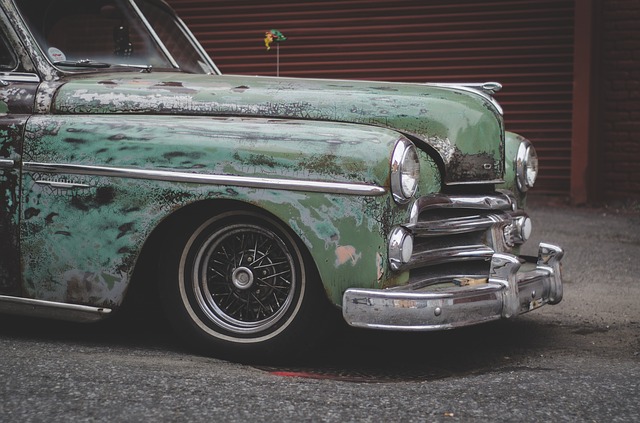
Classic and heritage cars hold a unique place in history. Each one reflects the design language, engineering ingenuity, and craftsmanship of its era. But as time passes, even the most iconic vehicles face deterioration, missing parts, and a lack of accurate documentation. That’s where 3D laser scanning is changing the game. By using LiDAR-based scanning systems, Arrival 3D helps restoration experts, museums, and collectors capture every curve and contour of these rare automobiles with sub-millimeter precision. The result? A digital replica so accurate it becomes a foundation for restoration, documentation, and preservation — without ever touching the vehicle.
What Is 3D Laser Scanning for Heritage Vehicles?
3D laser scanning, also known as LiDAR scanning, uses laser light to capture millions of precise measurements from a vehicle’s surface. These points form a dense point cloud, which can then be converted into a 3D model or CAD file. Unlike manual measuring tools, laser scanning is completely non-contact — perfect for delicate or irreplaceable vehicles. From the exterior body panels to interior dashboards and engine components, scanners like the Leica RTC360 or BLK360 record every detail with remarkable clarity.
This digital twin becomes a permanent record of the vehicle’s geometry, condition, and craftsmanship — ensuring that future restorers can bring it back to life exactly as intended.
Why Restoration Experts Rely on Laser Scanning
Restoring heritage cars often feels like detective work. Original blueprints might be lost, parts discontinued, and body panels warped by time. Laser scanning simplifies that challenge.
With a complete digital model, restoration specialists can:
- Compare current geometry to original factory specs or archived data.
- Reverse-engineer broken or missing parts using 3D printing or CNC machining.
- Assess alignment, symmetry, and deformation before starting any physical work.
- Preserve an accurate record for museums or private collections.
By bridging craftsmanship with technology, 3D scanning ensures accuracy, shortens restoration timelines, and preserves the authenticity of each vehicle.
Real-World Applications in Automotive Preservation
Reverse Engineering Rare Components
When original molds or tools no longer exist, a high-resolution scan provides exact dimensions for remanufacturing parts — from engine housings and badges to trim details and complex curves.
Digital Archiving and Virtual Exhibits
Museums and collectors can maintain digital archives of entire car collections. These 3D models allow virtual walk-throughs and online exhibitions without exposing real vehicles to light, humidity, or handling risks.
Analyzing Structural Integrity
Laser scanning detects subtle misalignments or warping in the chassis or body — data that’s critical when preparing vehicles for display, restoration, or safety testing.
Authentic As-Built Documentation
Each scan creates an as-built record that captures every weld, panel seam, and contour — preserving how the car looks today for future reference.
How the Laser Scanning Process Works
Arrival 3D follows a proven workflow to deliver high-fidelity automotive scans:
- Preparation: The car is cleaned and placed under optimal lighting to ensure reflective surfaces don’t distort results.
- Scanning: Using high-accuracy scanners like the Leica RTC360, multiple scan stations capture millions of 3D data points.
- Registration: Individual scans are aligned and stitched together in Cyclone REGISTER 360 to create a unified point cloud.
- Modeling: Engineers process the point cloud into 3D CAD or mesh models compatible with design or restoration software.
- Delivery: Clients receive deliverables such as .E57, .RCP, or .STP files, along with panoramic TruView viewers for immersive exploration.
Benefits for Collectors, Museums, and Restorers
- Preserves heritage without contact — ideal for priceless or delicate vehicles.
- Captures measurements with ±2 mm accuracy for reliable replication.
- Supports both digital and physical restoration workflows.
- Eliminates guesswork in alignment, fitting, and design reproduction.
- Creates permanent digital archives for museums, insurers, and curators.
With these advantages, 3D scanning helps ensure that even if time wears down the original, the data — and the legacy — remain intact.
Case Study: Digitizing the Past
Arrival 3D has collaborated with restoration shops and automotive museums across the U.S. to scan vehicles ranging from pre-war classics to post-1960s sports icons. These scans have supported everything from part fabrication to interactive 3D museum exhibits, giving new life to automotive history while inspiring the next generation of engineers and car enthusiasts.
Conclusion: Bringing Yesterday’s Machines Into Tomorrow’s World Laser scanning services are redefining how the world preserves classic and heritage vehicles. By creating accurate, data-rich digital twins, Arrival 3D empowers restoration professionals to restore, archive, and showcase these masterpieces with confidence.
Whether it’s a century-old roadster or a rare race car, 3D scanning ensures that the artistry and innovation behind it will never fade — keeping history alive in every precise detail.