Nationwide · Fixed-price after scope · LOD 200–500 when specified
Scan to BIM Services
Convert registered laser scan point clouds into construction-ready Revit models — architectural, structural, and MEP — at the Level of Development your project actually needs.
Scan to BIM Services USA - Millimeter-Precise As-Built Models, Delivered Nationwide
When inaccurate as-built data derails your renovation, retrofit, or new construction project, the cost isn’t just a delay; it’s rework, budget overruns, and missed deadlines. Arrival 3D’s Scan-to-BIM services eliminate that risk.
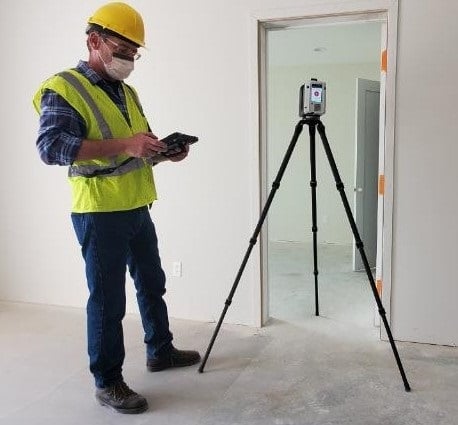
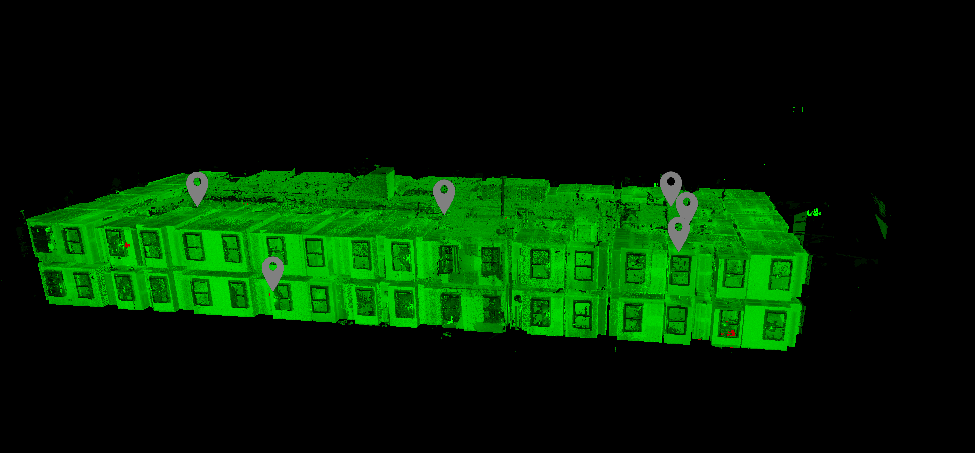
Using 3D laser scanning (LiDAR) technology RTC360 and Leica P-Series LiDAR scanners, our BIM specialists capture millions of data points from any facility and deliver construction-ready Revit models, IFC files, and 2D CAD drawings with ±2–4 mm precision processed through Cyclone REGISTER 360 and tailored to your exact Level of Development, from LOD 100 through LOD 500.
Trusted by architects, engineers, contractors, and facility managers across all 50 states, Arrival 3D has refined our Scan to BIM process across 20+ years and hundreds of projects from hospitals and schools to oil refineries, power plants, and historic landmarks. Arrival 3D is the Scan to BIM company that architects, engineers, and facility managers across America trust.
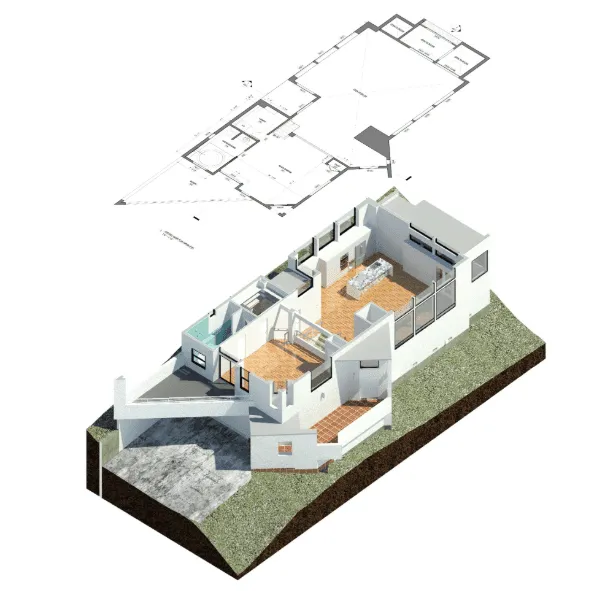
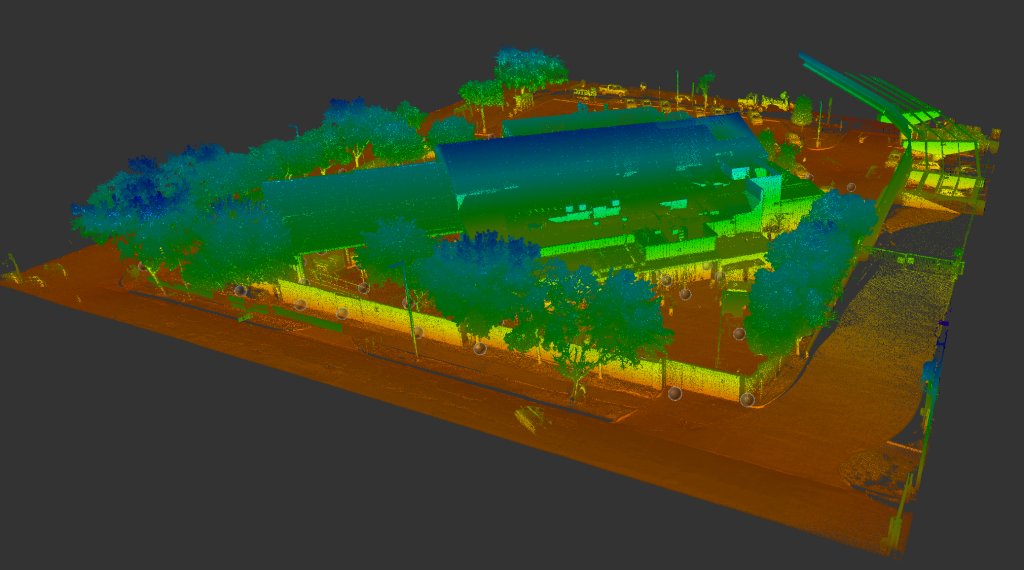
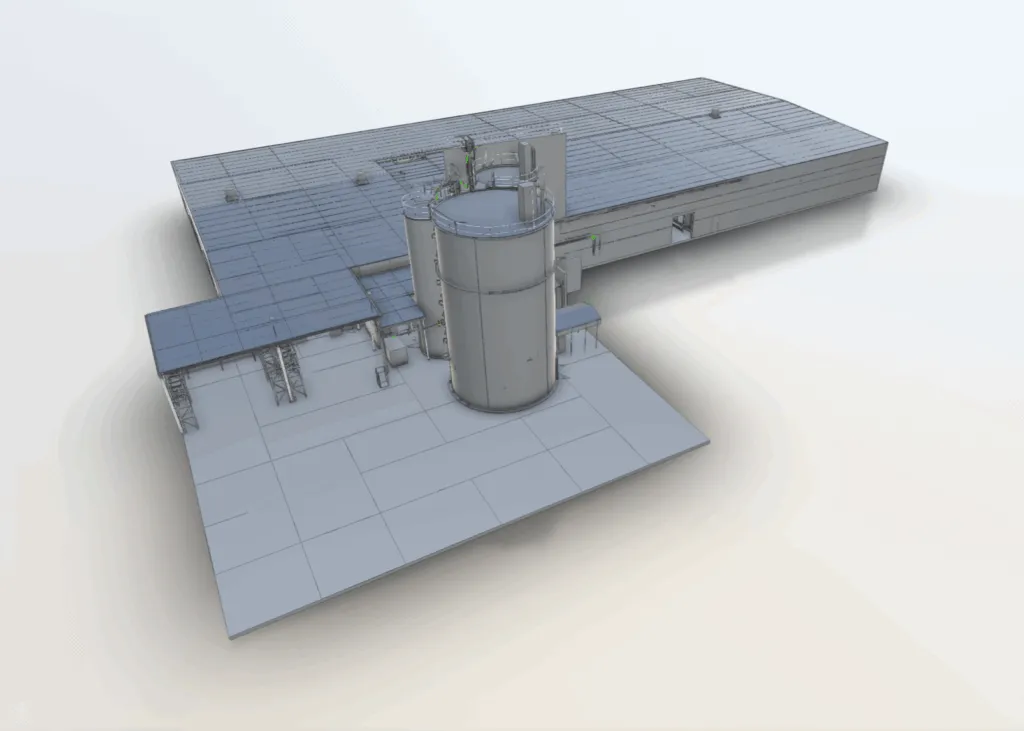
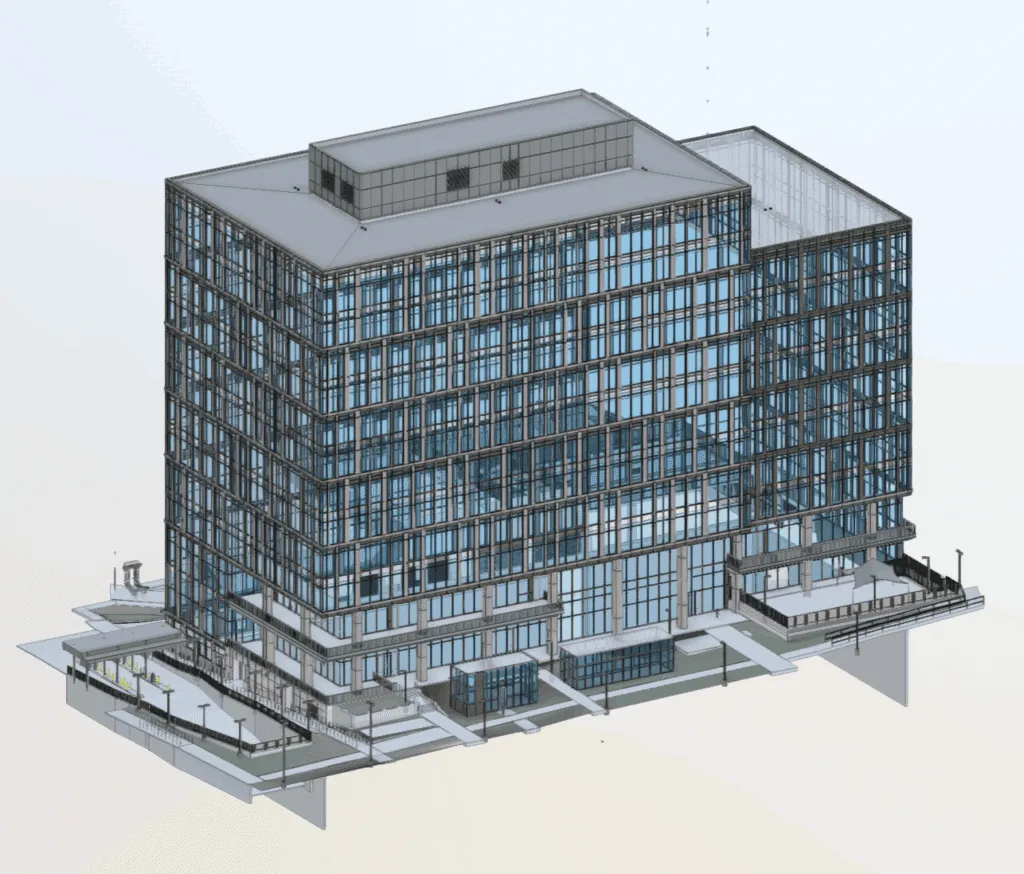
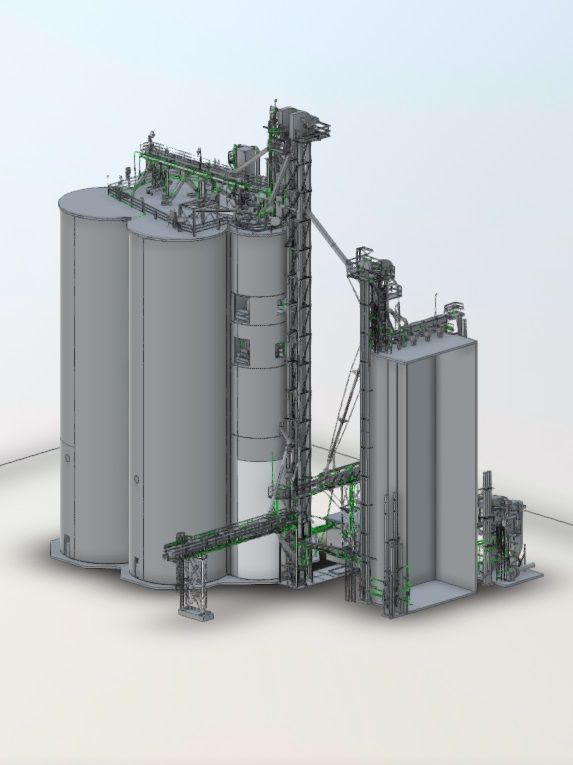
3D laser scanning technology is used to capture accurate and detailed point cloud data which is converted to precise MEP and architectural BIM models to support your project needs.
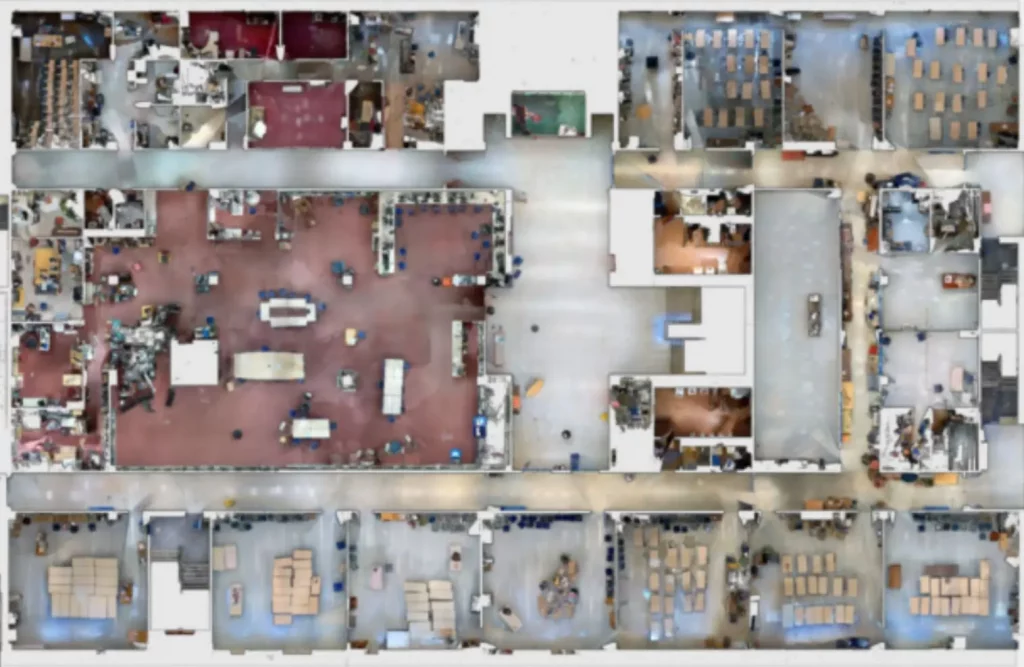
Scan to Plan drawings are more than just theoretical designs. These floorplans, sections, and elevations that are based on the true conditions of the building captured by a highly accurate measurement process.
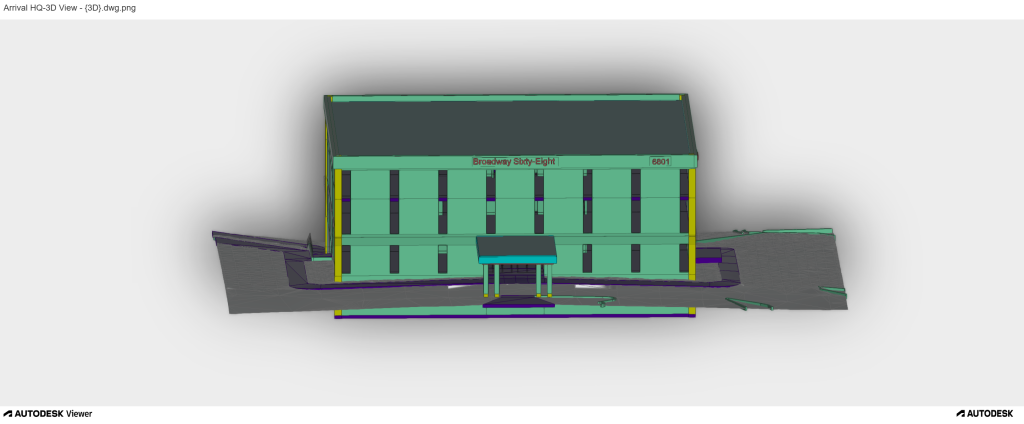
Work with correct information using a 3D BIM model that was created from real world conditions. High dimensional accuracy leads to excellence in engineering, renovation, remodeling, and facility management
Renovations with missing or unreliable as-built drawings
MEP coordination and clash detection against existing systems
Structural verification before retrofit or added loads
Owner / FM models for space and asset planning
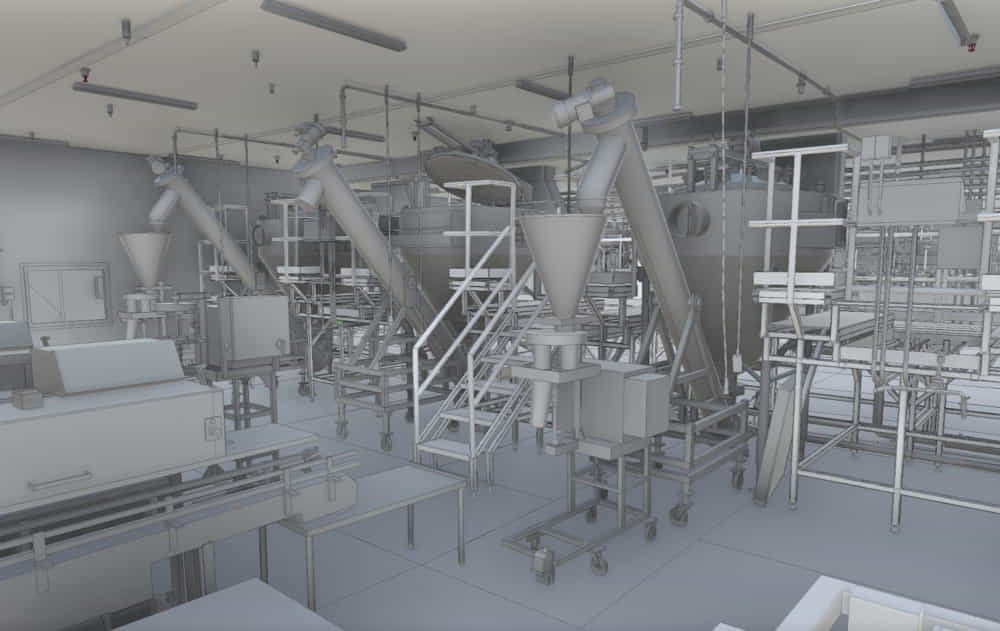
Industrial plant documentation for tie-ins and prefabrication support
Industrial and energy projects are scoped to verified facility types and access. We do not claim offshore or specific plant types unless project evidence is attached.
LOD is a modeling agreement, not a marketing badge. Most renovation projects land in LOD 200–350. Higher LODs cost more time and budget, we confirm what you actually need. LOD levels explained · LOA (Level of Accuracy) should be defined separately in the scope geometry detail ≠ survey accuracy.
Approximate geometry (LOD 200)
Generic placeholders for layout studies and early coordination. Fastest / lowest cost class.
Precise coordination (LOD 300–350)
Common renovation target: accurate size, shape, and location for clash-ready design.
Fabrication / as-built (LOD 400–500)
Only when the SOW truly requires fabrication detail or FM-grade as-installed modeling.
Our Scan to BIM Process
Site Capture
High-resolution 3D laser scanning records millions of points in hours.
Point Cloud Registration
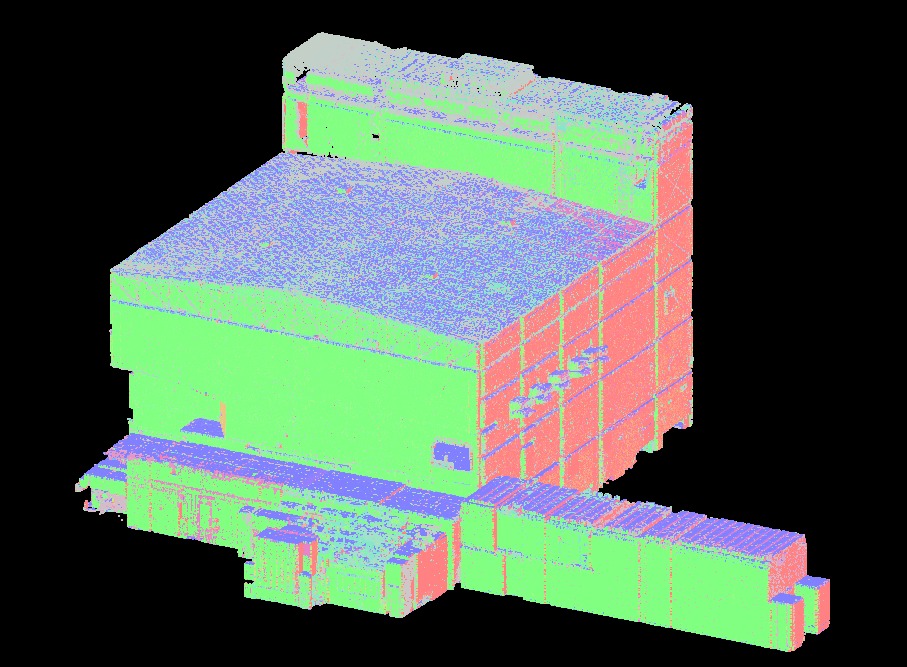
Data cleaned, aligned, and merged into a single dataset.
BIM Model Creation
Architectural, Structural, and MEP elements modeled per LOD specs.
Quality Assurance
Accuracy verified through both AI-driven checks and manual review.
Deliverables
Model delivered in RVT, IFC, DWG, OBJ, STL, or CAD formats, fully ready for design, construction, or facility management.
Scan to BIM Process
Accuracy & Modeling Expectations
Scan accuracy and model fidelity are related but not identical. Both are written into the SOW.
Typical TLS band
About ±1–6 mm depending on scanner, range, and site
Modeling target*
Often scoped in a ±2–4 mm class for critical elements — confirm per project
QA method
Cloud-to-model checks on critical elements + structured review (not “AI guarantees”)
Timeline*
Many mid-size LOD 300 packages fall in a ~2–4 week class after scanning; large MEP/industrial models are scheduled separately
Why Choose Arrival 3D for Your Scan to BIM Projects?
Why Choose Arrival 3D for Scan to BIM?
Nationwide Coverage – Deploying teams across the U.S. quickly.
Engineering-Grade Accuracy – ±2–4 mm precision with calibrated scanners.
BIM-Ready Deliverables – Revit, IFC, Navisworks, CAD, and mesh model.
Flexible LOD Models– From LOD 100 (conceptual) to LOD 500 (as-built).
Strict QA/QC – Automated and manual checks on every project.
Proven Expertise – 20+ years of experience, with case studies across industries.
Architects – No accurate as-built drawings for renovation projects. Precise Revit model of existing conditions in 3 weeks.
Structural Engineers – Need exact dimensions of existing structure for analysis. Millimeter-accurate structural BIM model with all elements.
LOD 400 Fabrication – Full fabrication, assembly, and installation detail for all elements. Fabrication shop drawings, manufacturing, contractor use.
LOD 500 As-Built – Final verified as-built conditions. Every element as installed, with all data. Facility management, commissioning, operations & maintenance
Scan to BIM pricing varies based on several factors including building size (square footage), complexity, Level of Development (LOD) required, location, and delivery timeline. For a standard commercial building under 10,000 sqft at LOD 300, pricing typically starts from $2,500–$5,000. Larger industrial facilities, complex MEP systems, or LOD 400–500 requirements will be priced accordingly. See the cost guide or request a fixed-price quote.
Scan-to-BIM vs Scan-to-CAD — which do I need?
Choose BIM when you need intelligent 3D coordination. Choose CAD when accurate 2D drawings are enough. We can advise after a short scope call.
Most renovations work well at LOD 300–350. Ask for LOD 400–500 only when fabrication or FM-grade as-installed detail is truly required. Read LOD levels explained.
What Is Scan to BIM and Why Does Your Project Need It?
Scan to BIM (Scanning to Building Information Modeling) is the process of capturing the precise as-built conditions of an existing structure using 3D laser scanning technology (LiDAR), then converting that raw point cloud data into intelligent, data-rich BIM models. Unlike traditional tape measurements or manual surveys, which are slow, error-prone, and limited in detail, 3D laser scanning captures millions of accurate data points in hours. The result is a complete digital twin of your building that architects, engineers, and contractors can work from with total confidence. Scan to BIM is essential for:
Renovation and retrofit projects where as-built conditions must be documented
Clash detection between MEP, structural, and architectural systems
Facility management and space planning using accurate digital models
Heritage preservation of historic buildings and landmarks
Construction verification to ensure work matches design intent
Do you offer Scan to BIM services nationwide?
Yes. Arrival 3D provides Scan to BIM services across all 50 United States. We have completed projects in major markets including Texas, California, New York, Florida, Illinois, Georgia, Washington, Colorado, and every other state. Our team is structured for rapid nationwide mobilization. we bring our Leica scanning equipment directly to your project site, regardless of location. We have served clients in remote industrial locations, major metropolitan areas, and everything in between. If your project requires Scan to BIM services anywhere in the USA, contact us and we will schedule your site visit promptly.
Elevate Your Project’s Success
At Arrival 3D, we provide highly accurate digital representations of buildings for architects, builders, engineers, and developers. Our Scan to BIM and Asset Tagging solutions ensure precision, clarity, and efficiency, delivering point clouds, 2D CAD drawings, and Revit models for seamless project execution.